

‘26 Office Design Trends in the Netherlands: The Work Environment as a Strategic Tool
By 2026, office design will be about more than just aesthetics. It's about the impact of your work environment on your people, collaboration and results.
Organisations are constantly evolving. Hybrid working has become the new normal. Teams collaborate less naturally. The labour market remains tight. Meanwhile, you're making decisions about growth, positioning and future-proofing.
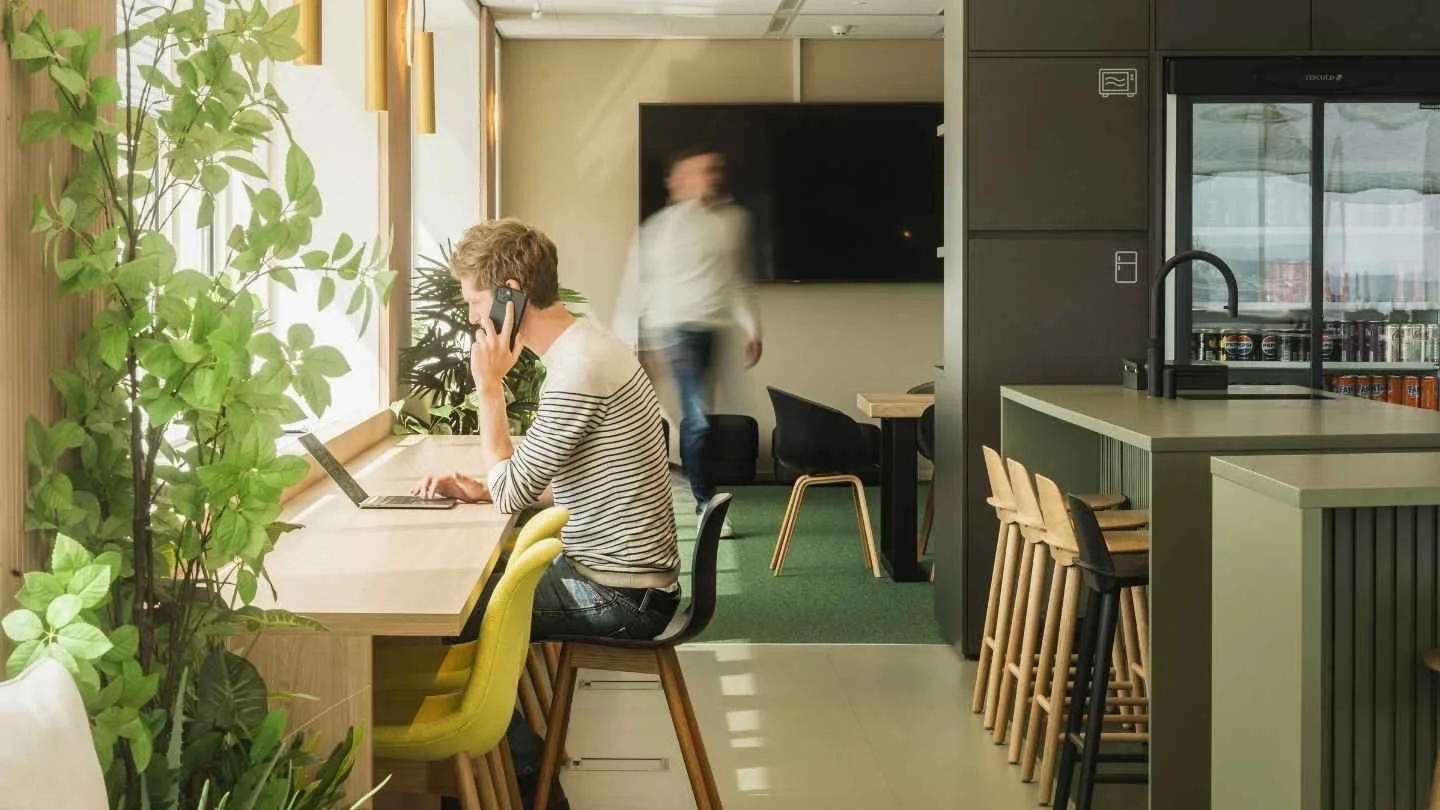
In this context, you can no longer treat your office as merely a functional facility. The way you design and build your work environment influences how people behave. Behaviour ultimately drives results.
These are the four shifts that will matter in 2026.
The office as a strategic tool, not just a facility
Most organisations only return to their offices when they have to. The lease is up. The team is growing or shrinking. The strategy has changed. These are the moments when real estate suddenly becomes a priority again.
However, the conversation often starts in the wrong place, focusing on square metres and costs. How much space do we actually need? How much could we save by downsizing?
A more important question is: what do we want this office to enable us to do?
Want teams to collaborate more easily? Then create spaces where people naturally run into each other.
Want more ownership? Then your environment needs to radiate trust and responsibility.
Want to strengthen your culture? Then that culture should be visible and tangible the moment someone walks in.
A well-considered workplace concept translates organisational strategy into physical space. It links organisational objectives to people's daily behaviour. This is the essence of office development in 2026.
From presence to real engagement
Hybrid working has permanently transformed the landscape. Employees are making more deliberate choices about where they work. This leads many leadership and HR teams to ask the same question: how do we get people back to the office more often?
However, this is actually the wrong question. Presence isn't the goal. Engagement is.
If the office doesn't offer clear added value, people will naturally choose efficiency. Unfortunately, working from home is the better option. This isn't because they're less committed, but because the office offers too little compared to what home already provides.
A more meaningful question is: what makes it worthwhile to come together in person?
A strong workplace concept doesn't focus on filling desks. It enables the moments that simply can't be replicated online: These include co-creation, team development, onboarding, strategic sessions and informal encounters that strengthen relationships.
Office design in 2026 is therefore about facilitating meaningful interaction. It's about creating an office environment where people feel seen, can find each other easily, and can sense what the organisation stands for.
When that happens, engagement grows naturally. This is reflected in better collaboration, higher productivity and a stronger position as an employer.
The work environment as a foundation for culture and collaboration
For many Dutch organisations with fifty or more employees, culture is no longer guaranteed. Growth is accelerating. Teams are growing in size. New colleagues join while hybrid working creates distance. What once emerged organically now requires deliberate choices.
Company culture is reflected in behaviour. It shows up in how accessible leaders are, and in how quickly colleagues reach out to each other. It shows up in how quickly colleagues reach out to each other. It shows up in how much room there is for honest conversation and genuine feedback. Your work environment plays a significant role here.
An office with rigid structures and closed-off departments can unintentionally create silos. However, a workplace concept that is designed to encourage connection, transparency and flexibility can strengthen collaboration and a sense of belonging.
During periods of growth, merger or strategic repositioning, for example, the work environment can help to make a new identity tangible. By deliberately aligning the design and layout of the space with the desired culture and carrying this through from concept to completion, you can make the strategy something that people actually experience in their day-to-day work.
The result is more trust, faster alignment and a culture that isn't just talked about, but truly lived.
Dutch office trend: Less square footage, more strategic impact
The shift towards hybrid working has prompted many organisations to take a closer look at their office space, with many considering redesigning or even redeveloping their existing environment. Often, less space is needed than before. This naturally raises the question of how to use the space efficiently.
However, office development in 2026 isn't just about filling space as efficiently as possible. It's about impact.
When you have less space, you have to make choices. Which activities genuinely deserve a physical space? Where does coming together make a real difference? Which moments strengthen your strategy, culture and collaboration?
Organisations that think carefully about this design their work environment around what truly matters: This could be spaces for strategic sessions where direction is set, project areas where different disciplines work together to create something new, or informal zones where trust grows and relationships deepen.
This gives meaning to every square metre.
Having less space doesn't mean having less ambition. It means investing more deliberately in a work environment that makes people feel good, helps them work better together and perform at their best.
That's exactly what office design in the Netherlands will be all about in 2026. It's not about how it looks, but what it makes possible.